ST 9000
Surgical/Sterile Processing Technician
Gain industry certification as a Sterile Processing Technician and ultimately work in hospitals, surgery centers, clinics and other healthcare facilities.
Program Overview
Certifications earned
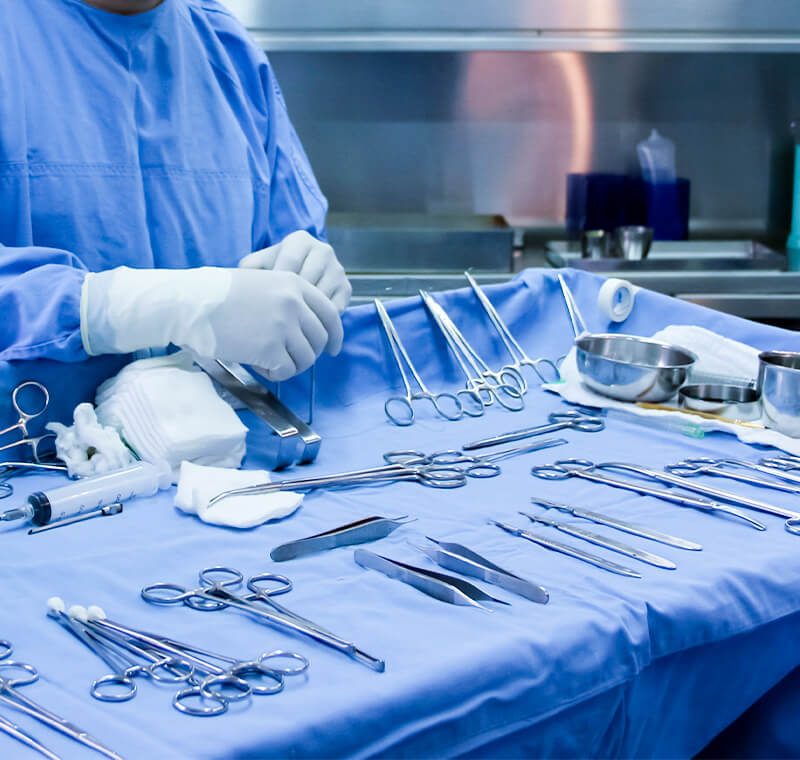
A Surgical/Sterile Processing Technician receives, documents, packages, sterilizes, stores, and/or issues instruments, equipment, and supplies for patient care. In addition to the sterile processing responsibilities, the technician must also be able to assist in the care of patients of all ages before, during, and after surgical procedures by performing scrub duties and related functions as a member of the surgical team. The technician maintains patient safety, privacy, and confidentiality, and complies with legal aspects of patient care. The technician complies with sterilization standards for handling sharp or contaminated instruments.
- Demonstrate an understanding of the soft skill expectations of an allied healthcare professional
- Grasp the importance of customer service, communication skills and professionalism
- Sterilize medical equipment and instruments
- Support the needs of the surgeon
- Clean, decontaminate and disinfection
- Documentation and records management
- Distinguish preoperative, intraoperative and postoperative duties
What You’ll Learn – ST 9000 Surgical/Sterile Processing Technician
The Surgical/Sterile Processing Tech program is ideal for individuals who are meticulous and who desire to be part of a highly skilled team in a growing field. To be successful, individuals must be able to work in stressful and emergency situations. They must be able to act quickly and accurately, and work well with other people. Because of the physical requirements of the job, techs must generally have strong manual dexterity and physical stamina.
The standard for performance in the operating room is set high, and there is little to no tolerance for careless mistakes or inattentiveness. Surgical Technologists, along with all other operating room personnel, must be able to learn to manage stress and thrive within these expectations. While much of this is gained from experience, solid organizational skills are required from day one. The surgical technologist must be able to remain focused and attentive to details. Above all, teamwork and professionalism are an absolute must.
This program is designed for those that might be new to the field, or for experienced hospital/surgical staff seeking a career change, upskilling, (re)certification, or higher earning power. Because every hospital or surgical center in the U.S. has a need for this role, there are ample opportunities in most geographic areas.
This program prepares students for the TS-C exam, issued through the NCCT. This program contains a clinical requirement to complete national certification. The clinical requirement consists of case documentation which requires a minimum of 125 surgical cases including a minimum of 30 scrubs in general surgery (with a mximum of 50) and a minimum of 75 scrubs in at least 3 (three) of the following areas [Gynecology; Obstetrics; Otorhinolaryngology 5; Genitourinary; Thoracic; Plastic/Reconstructive; Cardiovascular; Ophthalmology; Other; Neurosurgery; Peripheral Vascular]. At least 90 of the 125 cases must be 1st scrub cases. MedCerts students must complete these clinical hours before attempting to take the Tech in Surgery – Certified national certification exam issued through the NCCT. Students enrolling through an Employer or Academic Sponsored program are not required to complete clinical elements before attempting the certification exam.
Students will also be prepared to take the Certified Registered Central Service Technician (CRCST) exam, through the Healthcare Sterile Processing Association (HSPA) to earn Sterile Processing Technician certification.
While MedCerts does not guarantee clinical placement, we offer resources and a clinical team is available to support students from the very beginning of your program.
View More
Not Sure if Surgical/Sterile Processing Technician Training is Right For You?
Take our easy 2 minute Career Quiz!
Find your next careerSome MedCerts programs are restricted in certain states or regions. Please review our State Restriction page to see what restrictions there may be in your state/region or residence of employment to ensure you are eligible for enrollment.
These restrictions may not apply to students taking programs through an employer, academic or government-sponsored model – including MyCAA, GI Bill® Reimbursement and Army, Air Force or Coast Guard Credentialing Assistance. To determine eligibility, please confirm with your sponsor or review our military spouse MyCAA-approved or Military Credentialing Assistance-approved programs
Program Details

- Web browser with internet connection
- Course registration & payment
- Employer/Clinical Sponsorship – Applicants to these programs MUST provide verification that an Employer or Clinical Site has agreed to accept the applicant in efforts to fulfill “surgical case” requirements required for Tech in Surgery (TS-C) certification before enrollment. With this Sponsorship, the student must be guaranteed to perform a minimum of required surgical cases during the term of enrollment or immediately upon completion of their Medcerts program.
- The MedCerts Student Clinical Site Information Form must be submitted to MedCerts prior to enrollment.
- Expert-led video based training
- Competency assessments
- National Certification exam fee
- National Certification exam fee
*The cost of all materials needed for this program are covered by MedCerts. They are not included in the tuition costs and the student is not liable for any costs or fees related to the above materials.
- Dedicated Student Success Advisors
- Tailored support based on performance & behavior
- Exam preparation process
- Career Services Advisor
- Completed Case Documentation – including a minimum of 125 surgical cases – required for full TS-C national certification, issued through the NCCT
- Students not enrolled in an employer-sponsored program must complete this clinical requirement before attempting the TS-C national certification exam.
Career Outlook

Surgical/Sterile Processing Technician
Job Opportunities

openings in the US


potential
Tuition Cost & Payment Options
Total Program Cost
$
6,000
What’s Included:
- Expert-led video based training
- Competency assessments
- National Certification exam fee
- National Certification exam fee
*The cost of all materials needed for this program are covered by MedCerts. They are not included in the tuition costs and the student is not liable for any costs or fees related to the above materials.
Payment Options

Train now, pay over
time with Clasp
The MedCerts Education Loan made available through the Clasp Platform is a flexible, no-cosigner loan that isn’t dependent on someone else’s credit history, income, or willingness to take on shared financial responsibility.

Easy Monthly Payments
with Affirm
Enroll now, pay over time with Affirm, APR as low as 0%.

Pay your tuition
in Full
Paying in full is an option for those who prefer to pay their tuition in one upfront payment.
Additional Funding Options

FAQs
Surgical/Sterile Processing Technician Online Certification Training Program—Frequently Asked Questions
A Surgical/Sterile Processing Technician is responsible for sterilizing, packaging, and managing surgical instruments and equipment. They work in hospitals, surgery centers, and clinics, ensuring that all surgical tools are properly cleaned, decontaminated, and stored. They also assist in the care of patients before, during, and after surgical procedures by performing scrub duties and related tasks
The career outlook for Surgical/Sterile Processing Technicians is very positive, with available jobs expected to grow by 5% over the next ten years.
Salaries can range from $37,000 to $101,000 annually, depending on experience, location, and the specific office or clinic.
To start your career journey as a Surgical/Sterile Processing Technician,, you need a high school diploma or equivalent, provide the Sponsorship Acknowledgement form signed by prospective employer agreeing to host the graduate for post-program surgical cases (scrubs) as a full-time/part-time employee, extern, or apprentice (required to attain TS-C certification), complete a formal training program such as MedCerts, pass the TS-C exam offered by the National Center for Competency Testing, and the CRCST exam offered by the Healthcare Sterile Processing Association. Students who pass the TS-C exam are required to complete the following hands-on requirements within two years of passing the NCCT exam. Students are responsible for securing their clinical sites:
- A minimum of 30 (maximum of 50) scrubs in general surgeries and
- Minimum of 75 scrubs in at least three (3) of the following areas
- Gynecology
- Genitourinary
- Cardiovascular
- Neurosurgery
- Obstetrics
- Thoracic
- Peripheral Vascular
- Ophthalmology
- Otorhinolaryngology
- Plastic/Reconstructive
- Other (please specify)
- Orthopedic
- Diagnostic Scopes (Maximum of 15)
Students who pass the CRCST exam are required to complete a total of 400 hours of hands-on experience in a Central Services (CS) department in the following categories. Students are responsible for securing their clinical sites:
- Decontamination (120 hours)
- Quality Assurance Processes (24 hours)
- Preparing and Storing Instruments (120 hours)
- Storage and Distribution (24 hours)
- Sterilization and Disinfection (96 hours)
- Equipment (16 hours)
In the MedCerts online Surgical/Sterile Processing Technician training program, you will learn a comprehensive range of skills, including sterilization techniques, surgical instrument management, decontamination procedures, surgical suite preparation, infection control, patient care during surgical procedures, legal and health regulations compliance, and maintaining surgical equipment.
To enroll in the MedCerts Surgical/Sterile Processing Technician training program, you need a web browser with an internet connection, course registration and payment and verification of an Employer or Clinical Sponsorship. This sponsorship must confirm the applicant can fulfill the “surgical case” requirements for the Tech in Surgery (TS-C) certification. Additionally, the MedCerts Student Clinical Site Form must be submitted prior to enrollment.
Tuition is competitively priced at $6,000. The cost includes all of your materials and registration fees for your CRCST and TS-C examinations.
MedCerts offers various payment options. Additionally, students may qualify for government funding and scholarships.
While MedCerts does not offer financial aid, students may be eligible for options through government grant-funded programs like:
SpouseWorks Scholarship (formerly MyCAA)
The total program duration is 24 weeks if completing 15-20 hrs of coursework per week.
The program is developed with collaboration from industry-recognized subject matter experts and includes interactive simulations, interviews with real-world experts, game-based learning, and more, catering to every type of learner.
Yes, the program includes a strategic exam preparation process and dedicated Student Success Advisors to provide tailored support based on performance.
The program includes expert-led video-based training, competency assessments, and the national certification exam fee. All materials needed for the program are covered by MedCerts.
Some MedCerts programs are restricted in certain states or regions. Please review our State Restriction page to view what restrictions there may be in your state/region or residence of employment and ensure you are eligible for enrollment.
We’re not institutionally accredited as a training provider, but the certifications you’ll earn in this program are accredited through the exam-issuing authorities, the NCCT and HSPA. So while our school itself doesn’t hold accreditation, you’ll earn an accredited certification upon passing your national exams and completing clinical requirements.
To become fully certified, students who pass the TS-C exam are required to complete the following hands-on requirements within two years of passing the NCCT exam. Students are responsible for securing their clinical sites:
- A minimum of 30 (maximum of 50) scrubs in general surgeries and
- Minimum of 75 scrubs in at least three (3) of the following areas
- Gynecology
- Genitourinary
- Cardiovascular
- Neurosurgery
- Obstetrics
- Thoracic
- Peripheral Vascular
- Ophthalmology
- Otorhinolaryngology
- Plastic/Reconstructive
- Other (please specify)
- Orthopedic
- Diagnostic Scopes (Maximum of 15)
To become fully certified, students who pass the CRCST exam are required to complete a total of 400 hours of hands-on experience in a Central Services (CS) department in the following categories. Students are responsible for securing their clinical sites:
- Decontamination (120 hours)
- Quality Assurance Processes (120 hours)
- Preparing and Storing Instruments (120 hours)
- Storage and Distribution (24 hours)
- Sterilization and Disinfection (16 hours)
Disclaimers
- While MedCerts training and related target certifications may be accepted and/or approved by your state of residency, employers reserve the right to dictate pre-requisite education, experience, or certification/licensure requirements for their positions. We strongly advise students to research target job posts from area employers and relevant state requirements, barriers, or restrictions prior to enrollment to ensure eligibility upon graduation.
